Environmental testing for temperature, humidity, vibration, corrosion and mechanical stress – for reliable product qualification
Products are exposed to a wide range of environmental conditions throughout their life cycle - from temperature fluctuations and humidity to vibration, dust, water, and corrosive atmospheres. To ensure that parts, components, and systems function reliably under real-world conditions, they are tested in environmental simulation under controlled and reproducible laboratory conditions.
The tests are performed in accordance with international standards and precisely replicate the stress profiles defined in those standards. Environmental simulation is therefore a key element of product qualification accross almost all technical industries, including automotive, industrial applications, medical technology, aerospace, and rail.
Our testing infrastructure
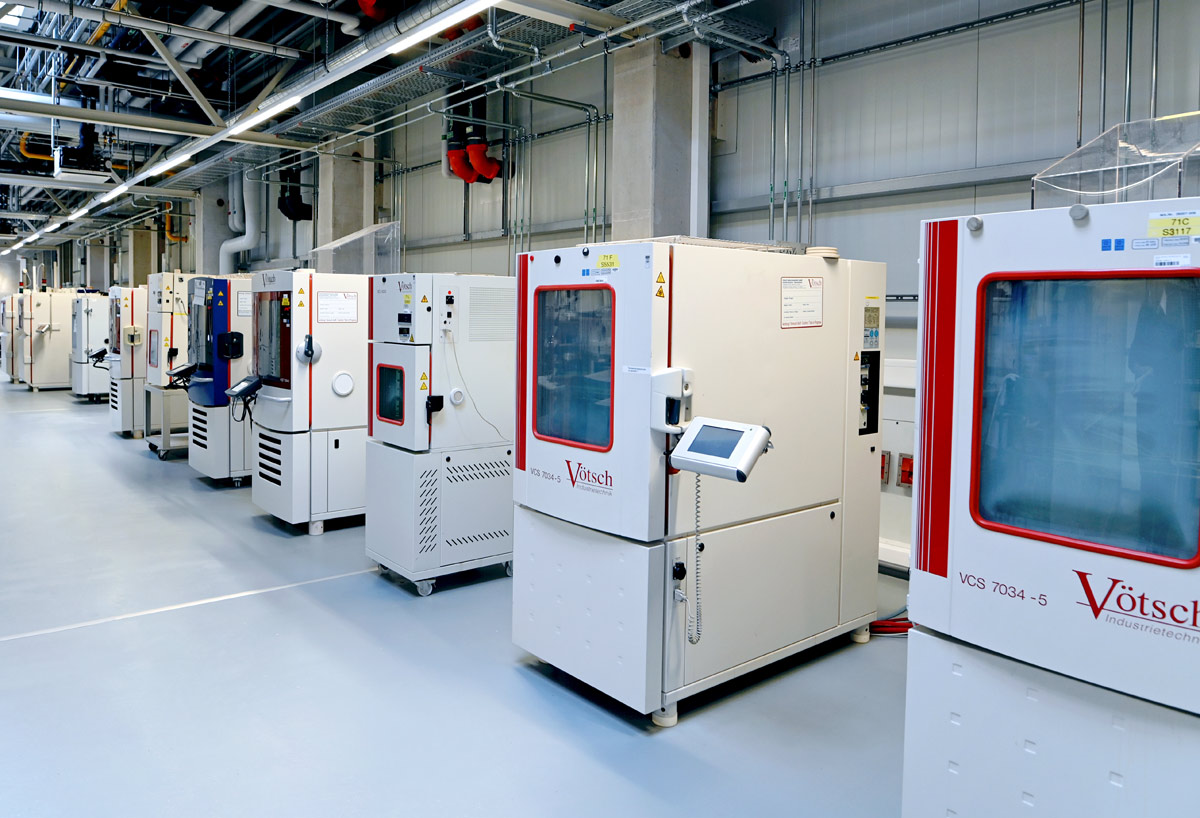
- 16 climatic chambers (volume: 0,2 m³ to 34 m³)
- Temperature range: -70 °C to +180 °C
- Humidity range: 10 % to 98 %
- Temperature gradient up to 12 K/min
- 3 thermal shock chambers with transition times < 10 s
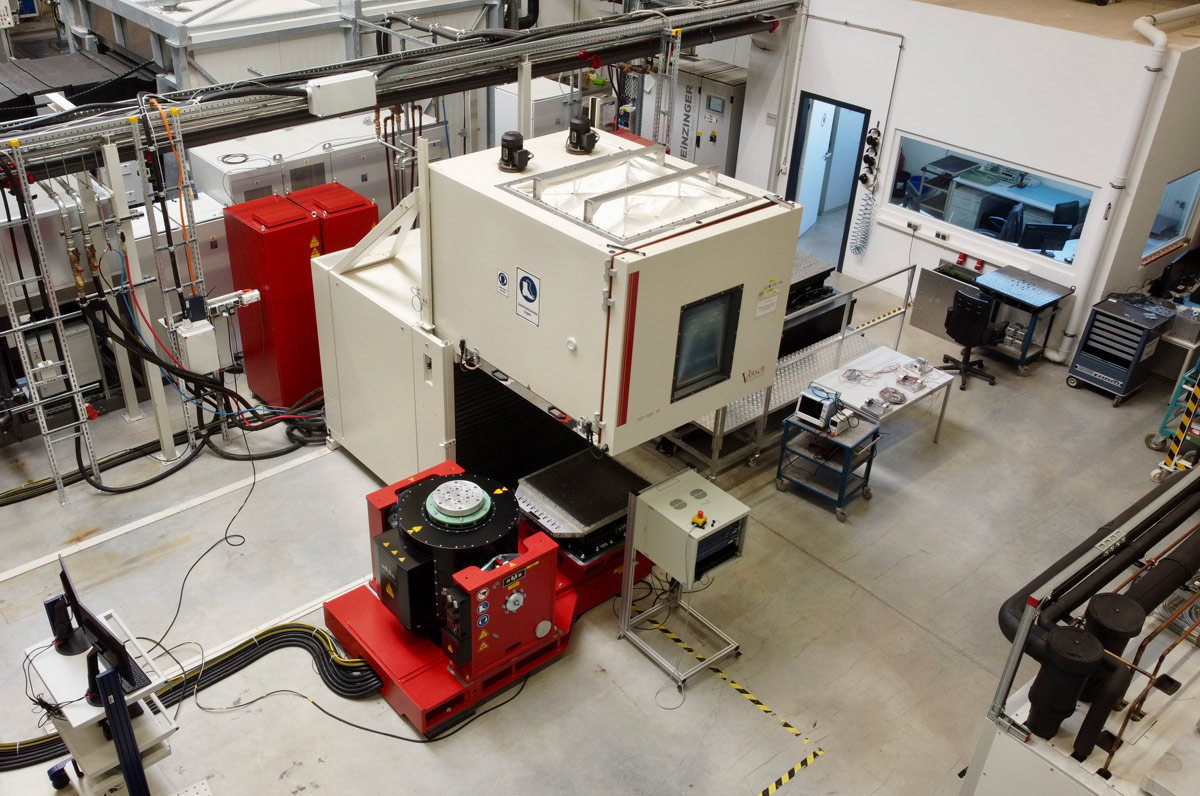
- 6 shakers for vibration and shock testing
- 2 force–displacement testing machines
- Test stations for electrical testing (e.g. according to IEC 60512)
- Detailed test reports according to ISO 17025
Climatic Testing
Products in aerospace, automotive, rail and energy sectors are exposed to extreme climatic influences such as heat, cold, humidity, and thermal shock. Climatic testing simulates these environmental conditions to evaluate the effects of temperature, humidity, and air pressure on functionality and service life. This enables validation of component durability and significantly improves long-term product reliability.
Further information can be found here.
Mechanical Testing
Mechanical environmental simulation verifies whether products can withstand real-world mechanical stresses during transport, storage, and operation. This allows potential weaknesses in design or packaging to be identified at an early stage. It provides a solid basis for validating reliability, safety, and service life - whether for electronics, medical devices, automotive components, or consumer products.
Further information can be found here.
Qualification of electromechanical components
Electromechanical components must be tested under realistic conditions to ensure their functionality and reliability actual applications. We offer comprehensive end-to-end qualification of electromechanical systems for a wide range of industries - from automotive and medical technology to aerospace and rail.
Further information can be found here.
HALT / HASS Testing
HALT (Highly Accelerated Life Testing) and HASS (Highly Accelerated Stress Screening) enable early detection of weaknesses in electromechanical systems during both development and mass production. By applying highly accelerated stress conditions, weak points can be detected significantly faster than with conventional testing methods. HALT testing is primarily used in development, while HASS testing is applied in serial production - across industries including automotive, aerospace, medical technology and household appliances.
Further information can be found here.
Corrosion Testing – corrosive gases & salt spray
Corrosion is one of the most common causes of material degradation and functional failure. For reliable qualification of components, coatings, and materials, we offer carrion testing using corrosive gases and salt spray in accordance with international standards. Our testing methods simulate realistic environmental conditions and enable a meaningful assessment of corrosion resistance.
Further information can be found here.
IP-Testing (Ingress Protection Testing)
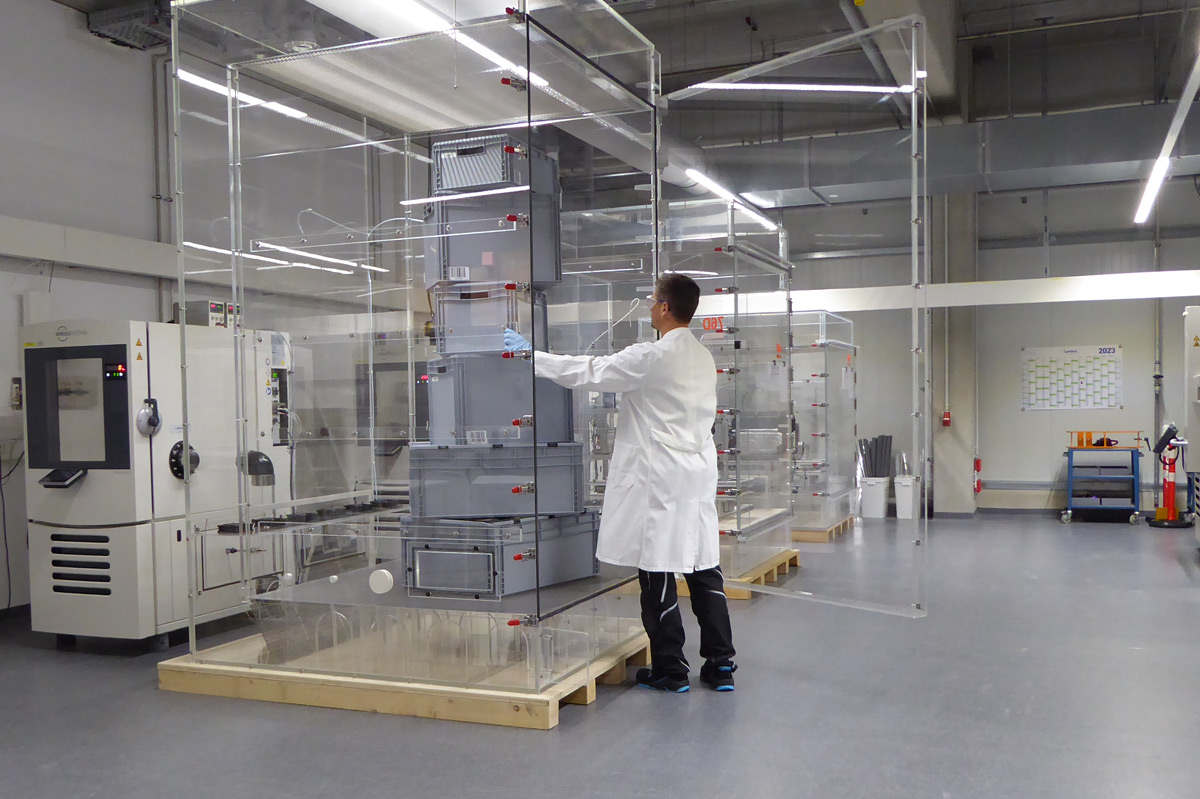
IP-Testing comprises standardized test procedures for the quantitative and reproducible evaluation of the protective performance of enclosures for electrical equipment. Its objective is to provide verifiable evidence of resistance against the ingress of solid foreign objects, dust, and water under defined environmental and test conditions.
Further information can be found here. (LINK ZUR NEUEN ENGL. SEITE)
Standards & Specifications
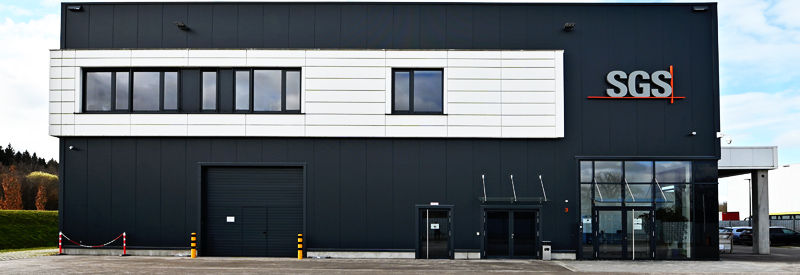
SGS at the Geretsried-Gelting site is accredited by the national accreditation body of the Federal Republic of Germany (DAkkS, Deutsche Akkreditierungsstelle) according to DIN EN ISO/IEC 17025 (ILAC-compliant). Further information about our accreditation can be found here.
Contact
Florian Hüller / Alexander Belkner
t: +49 8171 34489-18
E-mail: