Identify weaknesses before they become problems
HALT and HASS are essential methods for detecting and eliminating potential weaknesses in electro-mechanical systems during the development or manufacturing phase – long before they lead to failures in the field.
Through targeted, highly accelerated stress tests, weak points can be detected much earlier and faster than with traditional testing methods. This is why HALT testing is widely used in development and HASS testing in mass production across various industries, especially in sectors such as automotive, aviation, and medical technology.
Our testing infrastructure
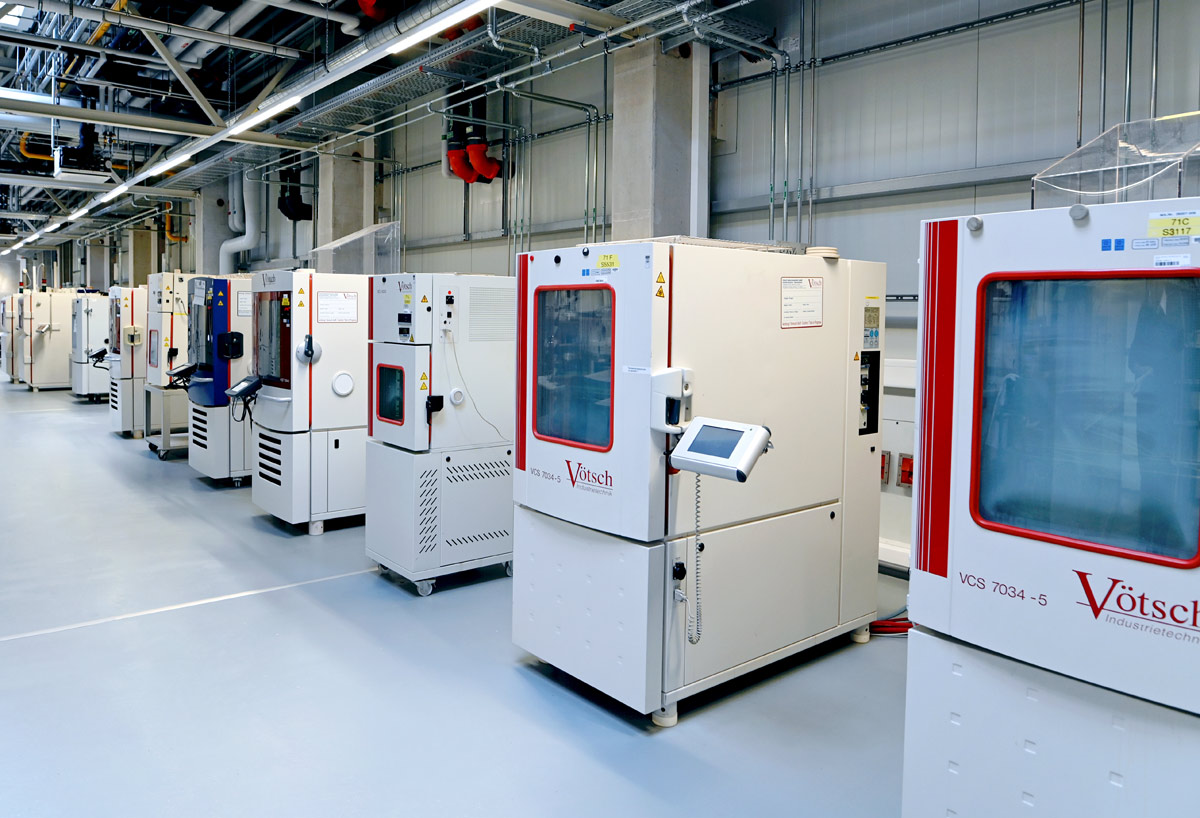
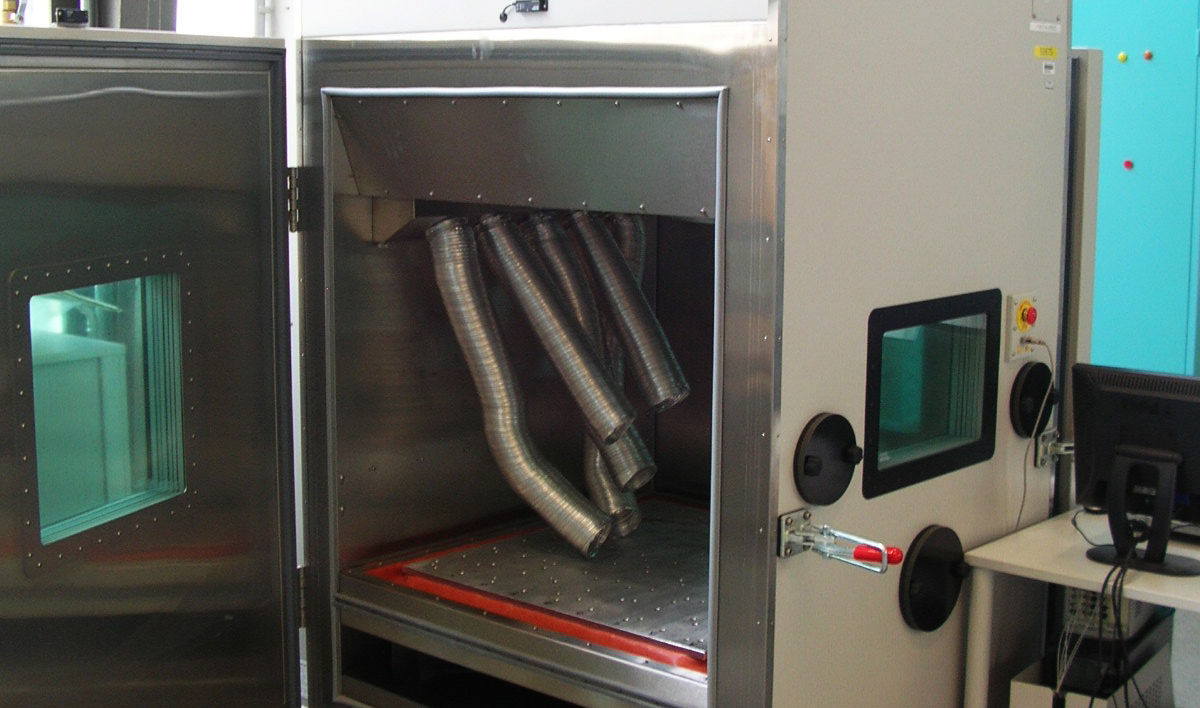
- Test chamber approx. 1m³
- Cooling with liquid nitrogen
- Electrical heating (heating coils)
- Temperature range: -100 to +200 °C
- Temperature change rate: up to 60 K/min
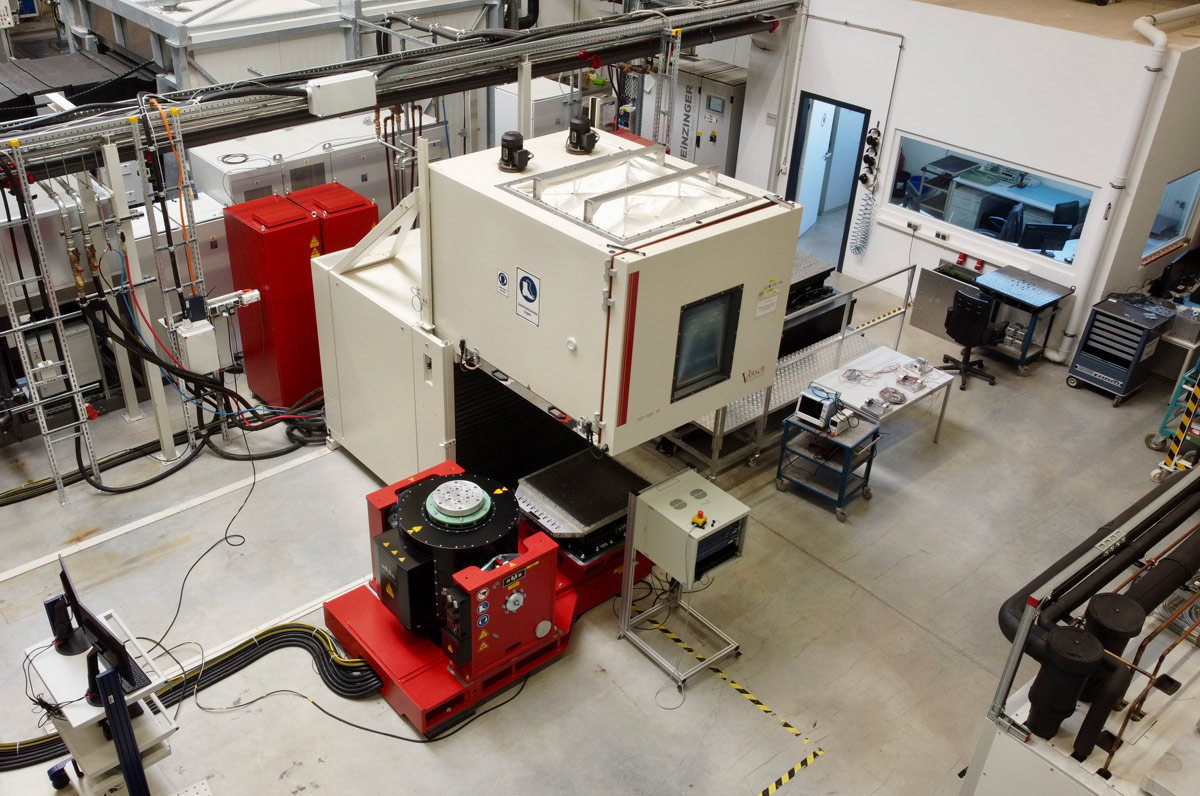
- Vibration generated by pneumatic hammers beneath the table
- Broadband vibration: approx. 5 – 10,000 Hz
- 6 degrees of freedom (3 axes + 3 rotational moments)
- Acceleration: 5 – 50 grms
- Detailed test reports in accordance with ISO 17025
HALT (Highly Accelerated Life Test)
The Highly Accelerated Life Test (HALT) is a development-accompanying stress test in which assemblies are exposed to extreme thermal, mechanical or product-specific stresses. The objective is to identify weak points at a very early stage.
During the 3–5-day test
- Functional and failure limits are determined
- Failure modes are analyzed directly
- Improvements are identified immediately
Compared to conventional endurance testing, HALT enables significantly faster and more efficient product optimization.
HASS (Highly Accelerated Stress Screening)
Highly Accelerated Stress Screening (HASS) is a production-accompanying screening process based on a successfully completed HALT. Its objective is to reliably detect manufacturing defects. Through targeted yet lifetime-compatible stress testing, weak units are identified before leaving the factory.
HASS therefore is a key tool for ensuring stable series production quality.
Benefits of HALT / HASS
- Early identification of potential weaknesses during development
- Optimal product quality at market launch
- Significantly faster results compared to conventional environmental testing
- Reduction in development costs and times
- Increased end-customer satisfaction
Standards & Specifications
Standardization in the classical sense is not possible for HALT and HASS, as the applied environmental stress depends on the properties of the EUT, specific customer requirements, and engineering experience.
General Guideline for HALT can be found in Qualmark HALT Testing Guidelines. A description and classification in the context of other methods for product accelerated testing is given in IEC 62506 - Methods for product accelerated testing.
Contact
Florian Hüller / Alexander Belkner
t: +49 8171 34489-18
E-mail: